Most adults who walk into a Jiu-Jitsu school for the first time have the same three worries. Am I too old? Am I too out of shape? Will everyone else know what they are doing except me?
If that is you, you are in good company. Many of our adult students in Deer Park started with the same doubts. Some came for fitness, some for self-defense, and some just wanted something for themselves after years of driving kids to practice.
This guide covers what adult Jiu-Jitsu is really like for beginners, how to get through the first month, and why it might be the best thing you do for your body and mind this year.
Why Adults Start Jiu-Jitsu
Every adult has their own reason. These are the ones we hear most often:
- Real self-defense. Jiu-Jitsu teaches you to stay calm and in control if someone grabs you or takes you to the ground.
- Fitness that doesn't feel like a chore. You will sweat hard, but you'll be thinking about technique, not counting reps.
- Stress relief. It's hard to worry about work when someone is trying to pin you. Many students call it their therapy.
- Confidence. Learning to handle pressure on the mat makes everyday pressure feel smaller.
- Community. You'll train with the same people every week, and they become friends.
“As a long standing practitioner and Black Belt under Makoto Jiu Jitsu, I can state that the martial arts experience under Shihan Jerry and his team is life changing physically and mentally.”
"I'm Too Out of Shape to Start"
This is the number one thing that keeps adults off the mat, and it gets things backward. You do not need to be fit to start Jiu-Jitsu. Jiu-Jitsu is how you get fit.
Scaled to you
Instructors adjust warm-ups and drills for your level. Nobody expects a beginner to keep pace with someone who has trained for years.
Technique beats strength
Jiu-Jitsu was built so that a smaller, weaker person could use leverage to control a bigger one. That makes it one of the few martial arts where age and size matter less than learning.
Progress comes fast
Most new students notice better cardio, grip strength and flexibility within the first few weeks. Many say the stairs at work suddenly got easier.
Your First Adult Class, Step by Step
Knowing what is coming takes most of the nerves away. Here is how a typical beginner's first class goes:
- Arrive early. Come 10 to 15 minutes before class to meet the instructor and fill out a quick form.
- Warm-up. Light movement, rolls and Jiu-Jitsu-specific drills like shrimping and bridging.
- Technique. The instructor shows a position or escape, step by step.
- Drilling. You practice it slowly with a partner. Someone experienced usually pairs with newcomers.
- Positional practice. Light, controlled rounds starting from a specific position. Beginners can sit out or go easy.
- Bow out. Class ends with a bow, a handshake and usually a few laughs.
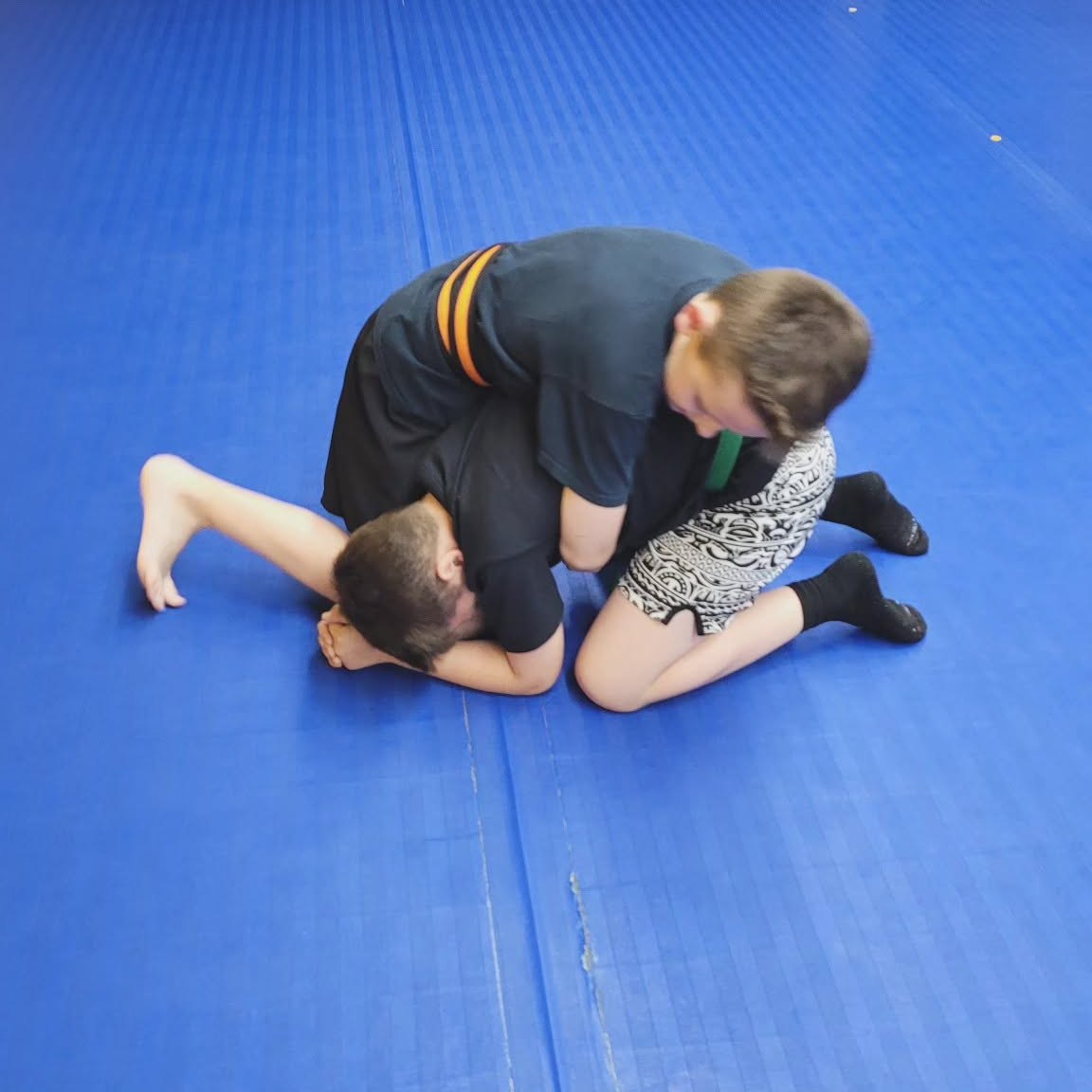
You will forget half of what you learned by the time you get to your car. That is normal. It sticks with repetition.
Is Jiu-Jitsu Safe for Adults?
Jiu-Jitsu has a reputation as a tough sport, and it is. But a good school runs a safe room. Here is what keeps adult students healthy:
- Tapping. Tap your partner or the mat and they release immediately. Every time.
- Controlled pace. Beginners drill slowly and only go live when they are ready.
- No ego culture. At a sincere school, upper belts protect new students rather than smash them.
- Clean mats. Mats are cleaned regularly, and good hygiene is expected of everyone.
Self-Defense That Actually Works
Many real altercations end up close, clinched or on the ground. Jiu-Jitsu trains exactly those situations, against a resisting partner, so the skills are tested rather than theoretical.
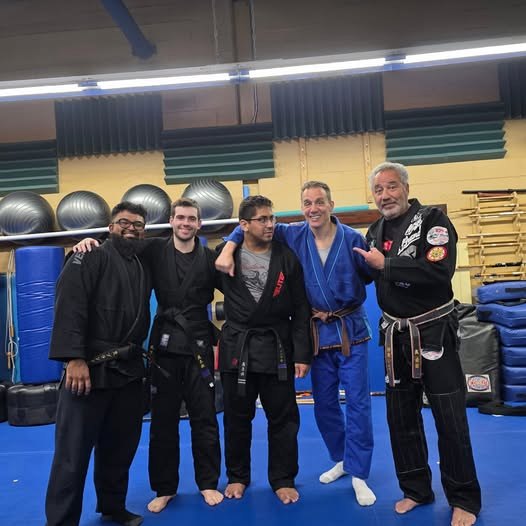
Shihan Jerry Minerva is a 5th degree black belt in Goshin Jiu-Jitsu with 39 years of experience. Goshin means self-protection, and that idea runs through our adult martial arts program. You will learn to:
- Escape common grabs and holds.
- Get back to your feet safely if you are taken down.
- Control an attacker without needing to out-muscle them.
- Stay calm and think clearly under pressure.
How to Get Through the First 90 Days
The hardest part of Jiu-Jitsu is not any technique. It is showing up during the first three months, when everything feels new. Here is how to stick with it:
- Pick two set days a week and put them on your calendar like a meeting.
- Focus on one thing per class. You cannot learn everything at once.
- Ask questions. Upper belts love helping newer students.
- Don't compare. The person tapping you has trained for years. Compare yourself to last month.
- Rest and hydrate. Sore muscles are normal at first and fade quickly.
“Wonderful place! Caring and fun staff! My son Jack has learned so much. Also tried the adult classes myself and loved it!”
Lots of parents start after watching their kids train. If your child is already in our kids program, you know the culture. Now it's your turn.
Choosing an Adult Jiu-Jitsu School
Adults train with us from Deer Park and nearby Bay Shore, Brentwood, West Islip and Dix Hills. When you compare schools, look for:
- A clear beginner path, not just a sink-or-swim open mat.
- Instructors with real, verifiable rank and experience.
- A friendly, respectful room where upper belts help newcomers.
- Class times that fit a working schedule.
- A trial so you can feel the culture before committing.
What to Bring and How to Prepare
A little preparation makes your first class feel smoother. Here's a simple list:
- Water bottle. You'll need it more than you think.
- Comfortable athletic clothes without zippers, buttons or pockets.
- Flip-flops or slides for walking off the mat to the restroom.
- Short nails and no jewelry, to keep you and your partners safe.
- A light meal two hours before rather than a big one right before class.
- An open mind. Everyone in the room was once exactly where you are.
Jiu-Jitsu for Women in Deer Park
Some of the most dedicated students in any Jiu-Jitsu room are women, and for good reason. Because the art relies on leverage, timing and technique instead of size, it is one of the most practical forms of self-defense for women.
If you are nervous about training with bigger partners, tell your instructor. They can pair you thoughtfully while you learn the basics, and you'll quickly discover how much control good technique gives you. Many women tell us the confidence they build on the mat changes how they walk to their car at night.
The Mental Side: Why Jiu-Jitsu Feels Like Therapy
Ask long-time students why they keep coming back, and fitness is rarely the first answer. It's usually something like "it clears my head."
Jiu-Jitsu demands full attention. For an hour, your phone, your inbox and your to-do list disappear. You learn to stay calm in uncomfortable positions, breathe through pressure and solve problems one step at a time. Those are skills that carry into a tough meeting, a hard conversation or a stressful week at home.
A Realistic Training Week for Busy Adults
You don't need to live at the gym to get good at Jiu-Jitsu. Most of our adult students have full-time jobs, kids and plenty of responsibilities. Here's what a sustainable week looks like:
- Two classes a week: enough to learn steadily and feel real fitness gains.
- One rest or recovery day between sessions: stretch, walk, or just let your body adapt.
- Five minutes of review: think through what you learned, or jot a quick note on your phone after class.
- A third class when life allows: a bonus, not a requirement.
Students who follow a simple rhythm like this tend to stick around for years. The ones who go all in for three weeks and burn out rarely do. Slow and steady really does win on the mat.
Our evening class times are built around a normal work day, so you can train after the office and still be home for dinner.
Frequently Asked Questions
Am I too old to start Jiu-Jitsu?
Adults start Jiu-Jitsu in their 30s, 40s, 50s and beyond. Train at your own pace, tap early and tell your instructor about any injuries.
Do I need any experience?
None at all. Most of our adult students had never trained before their first class.
What should I wear to my first class?
Athletic clothes without zippers or pockets are fine for a trial. Remove jewelry and trim your nails.
Will I get hurt?
Injuries are uncommon when you train with control and tap early. Beginners drill slowly and only spar lightly when they are ready.
How long until I get my first belt?
It depends on attendance and progress. Every belt at our school is earned, not handed out on a schedule, which is exactly why it means something.
Take the First Step
The hardest part is walking through the door. Make it easy with our intro offer: $14 for 14 days of classes + free t-shirt, with a 30-day money-back guarantee.
See class details on the adult martial arts page, check our questions page for more answers, or get in touch. We'll save you a spot on the mat.
New Student Experience
Ready to See It In Person?
14 Days of Classes + Free T-Shirt — $160 $14